ATM Skimming: A Cautionary Tale of Cloned Cards and Capture
In November 2024, a resident of Tampa Bay, Florida, engaged in a carding scheme that ended with his arrest just days later. This case exemplifies the vulnerabilities of using cloned credit cards in conjunction with modern technology.
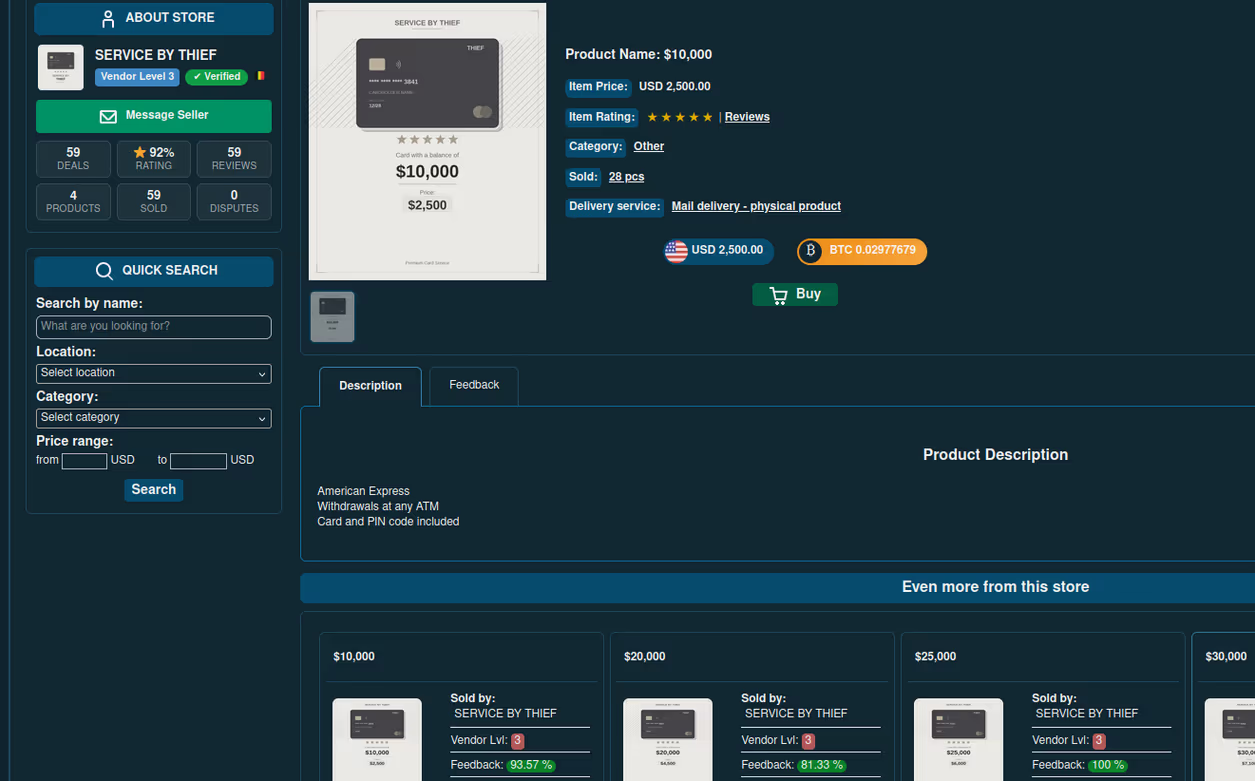
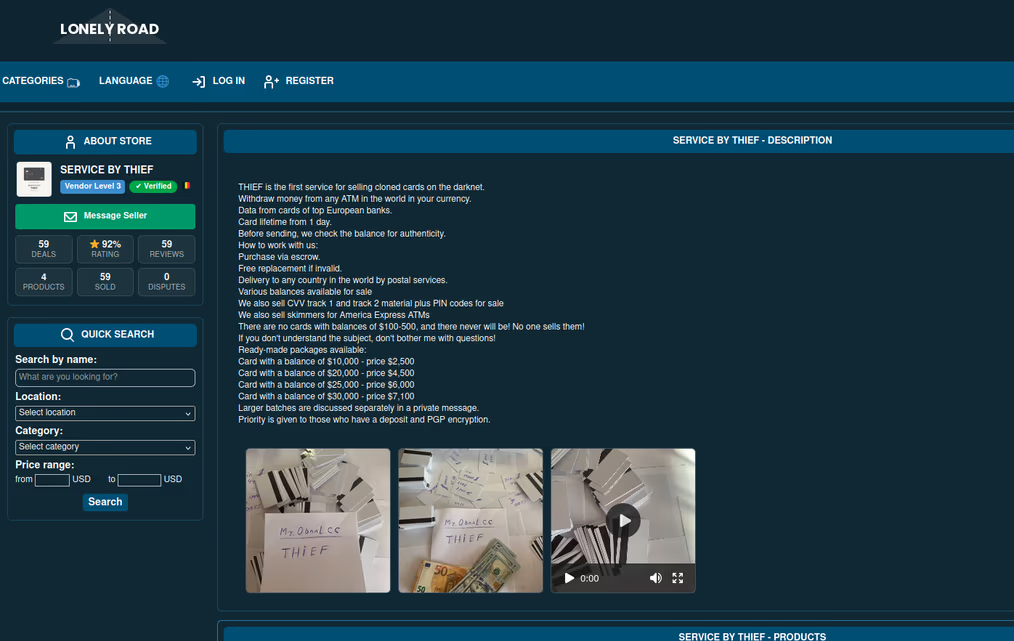
Mark T., aged 34, believed he had discovered a straightforward opportunity for quick cash. In November 2024, he acquired six cloned debit cards, complete with PIN codes, for $480 in cryptocurrency on a darknet marketplace. These cards held encoded magnetic tracks from genuine accounts, typical of carding market products. Initially, he withdrew a total of $4,200 from three different ATMs but found his actions cut short at the fourth ATM, leading to his identification and arrest shortly thereafter. This incident highlights not only Mark's rapid downfall but also the complex interplay of technology, surveillance, and investigative methods used in modern cybercrime detection.
What is Carding and How Does it Operate?
Carding refers to the buying and selling of stolen banking information and stands as one of the oldest forms of cybercrime. The process Mark engaged in followed a traditional sequence:
Skimming or Data Breach: Criminals gather magnetic card tracks through skimming devices at ATMs, or by purchasing data dumps on darknet websites.
Embossing: The stolen data is transferred onto blank cards, giving them the appearance of legitimate cards with embossed names and numbers.
PIN Code Acquisition: If the PIN is also compromised via methods such as hidden cameras, then the buyer has a functional card for withdrawals.
Cash-Out: The offender withdraws cash from ATMs before the victim notices the fraud.
Laundering: The withdrawn cash is converted to cryptocurrency, often through Bitcoin ATMs, to obscure the trail.
Mark purchased these cards on a marketplace where the payment was made in Monero, a cryptocurrency chosen for its privacy features. The cards arrived in unmarked packaging, creating the illusion of a successful, anonymous transaction. However, the reality is that ATMs possess capabilities beyond dispensing cash; they are also equipped to gather evidence.
How Do ATMs Serve as Surveillance Tools?
Modern ATMs are equipped with advanced surveillance technology, functioning not merely as cash dispensers but also as significant evidence collection devices. The following features are typically included:
Built-In Camera: Captures clear images of users at 1080p resolution, often with night vision capabilities.
Hidden Camera: Some ATMs contain an additional, less visible camera that records from a different angle.
Transaction Logs: Each withdrawal is meticulously documented, noting time, amount, card number, and transaction status.
Geolocation: ATMs are aware of their specific geographical location and relay that information to the bank.
Network Logging: Every communication with the bank's processing system is recorded, including connection details.
When Mark approached that fateful fourth ATM in a suburb of Tampa Bay, the built-in camera captured his image clearly—without any disguise. His withdrawal of $700 was recorded, leaving a trail of video evidence that would soon lead investigators directly to him. Criminals often misjudge the anonymity they believe the darknet provides, not realising that ATMs mark a boundary where their digital actions become subject to physical scrutiny.
Details of ATM surveillance technology.
What Was the Timeline of the Investigation?
The investigation into Mark's activities progressed swiftly, marked by critical developments over a series of days:
Day 1 (November 2024): Three individuals across Florida, Georgia, and North Carolina report unauthorised withdrawals to their banks, resulting in the blocking of their cards.
Day 3: Bank anti-fraud algorithms detect a pattern of withdrawals from the same batch of cloned cards distributed across different states, triggering an emergency flag.
Day 5: The case is escalated to the U.S. Secret Service (USSS) due to their jurisdiction over financial crimes, prompting a request for ATM logs and footage.
Day 8: Surveillance footage from the ATM reveals a clear image of a face, which is later matched to Mark T. in the Florida Department of Public Safety database. An analysis also shows that all withdrawals occurred within a 40-mile radius of his home.
Day 12: A warrant is obtained for Mark’s digital traces, revealing browser history and activity related to the crypto wallet.
Day 14: Law enforcement executes a search warrant at his residence, finding blank plastic cards, a magnetic stripe reader, a laptop with evidence of darknet use, and cash amounting to $3,200.
Day 15: Mark is arrested and during questioning, admits to purchasing the cards and successfully cashing out four of them. He notes that the last two cards were unusable as they were already blocked.
The rapid pace of the investigation exemplifies how quickly financial crimes can be traced back to perpetrators when modern technology and effective investigative methods are employed.
What Were the Outcomes of the Case?
The consequences of Mark's actions were severe and included various figures related to his criminal activities:
Withdrawals: 4 transactions made.
Total Withdrawn Amount: $4,900 from the ATMs.
Cost of Cards: Mark paid $480 for the six cloned cards.
Duration from Withdrawal to Arrest: Just 15 days.
Federal Prison Sentence: 5 years, equivalent to 60 months.
Financial Penalties: A total of $22,000 in fines and restitution was imposed.
Supervised Release Duration: 3 years following imprisonment.
Despite Mark's attempts to use Monero for anonymity, the investigation was able to bypass his attempts at concealment, showcasing the limitations of cryptocurrency in the face of thorough forensic work.
What Mistakes Did Mark Make?
Mark's arrest can be attributed to several critical mistakes made throughout his operation:
Geographical Concentration: All ATM transactions were within a 40-mile radius of his home, raising immediate red flags within banking systems.
Lack of Disguise: Mark did not attempt to conceal his identity, resulting in clear identification from ATM footage.
Centralised Exchange Use: Purchasing Monero from a KYC-compliant exchange linked his identity to the cryptocurrency used for transactions.
Physical Evidence Storage: Items found during the police search, such as cards and a magnetic stripe writer, were direct evidence of his illegal activities.
Cash on Hand: The presence of cash, matching the denominations withdrawn from ATMs, further implicated him.
Rapid Withdrawals: Conducting all transactions within a short period allowed for swift detection by anti-fraud systems.
Each of these factors illustrates how crucial discretion and careful planning are in evading law enforcement scrutiny in the realm of cybercrime.
What Lessons Can Be Drawn for Security Professionals?
Mark’s case serves as a valuable illustration of how security systems function effectively against cybercrime. Key takeaways for cybersecurity professionals include:
Importance of Anti-Fraud Systems: Banks employ advanced machine learning models and pattern recognition that operate automatically, often before human intervention is needed. Continued investment in this area is vital.
Integration of Forensics: The collaboration between physical and digital forensics is essential; while video from an ATM provides critical evidence, it requires contextual support from transaction logs to be effective.
Limitations of Cryptocurrency Anonymity: The use of KYC-compliant exchanges means that complete anonymity is unattainable. Investigators can trace actions back to individuals as long as KYC processes remain in place.
Need for Customer Awareness: Delays in reporting thefts by victims can lead to greater financial losses; educating customers about the risks and how to respond can mitigate damages.
These insights confirm that the systems in place can successfully counteract cybercriminal operations like Mark’s, often more effectively than individuals anticipate.
Summary of Mark's Legal Outcomes
Mark T. pleaded guilty in March 2025 to charges associated with fraud and money laundering. The U.S. District Court sentenced him to five years in federal prison, followed by supervised release, in addition to imposing a fine. While Mark was not the mastermind behind the operation, his role exemplified how even the final link in a criminal chain faces significant legal repercussions, reflecting the broader challenges law enforcement encounters in tackling cybercrime.
Mark's transactions originated from a darknet marketplace, highlighting the challenges in combating such online platforms.
FAQ
What is carding and how does it work?
Carding involves buying and using stolen banking information, which typically includes skimming data, cloning cards, and withdrawing cash from ATMs.
How do ATMs help in investigations?
ATMs are equipped with cameras and transaction logging systems that provide crucial evidence, helping authorities identify suspects swiftly.
What penalties did Mark face for his actions?
Mark was sentenced to five years in federal prison along with a fine of $22,000, showcasing the serious legal consequences of financial crimes.
Can cryptocurrency purchases be traced?
Yes, transactions made through KYC-compliant exchanges can be traced back to the buyer, revealing their identity despite the use of anonymous cryptocurrencies.